Benovo builds saunas, cold plunge tubs, and infrared recovery products directly from its own factory — which means the wood is sourced and graded in-house, the heaters are paired to the right cubic footage, and the customization options are real, not a dropdown menu that leads to one configuration. The lineup spans 25 products across six categories, from a 47"-long 2-person spruce barrel to a 6–8 person Canadian cedar sauna room with a dual infrared-and-steam system, plus cold plunge tubs that chill down to 37°F and a 600W infrared sauna blanket that plugs into any standard outlet.
Every Benovo electric sauna stove — TOULE and HARVIA, from 4.5KW through 9KW — carries ETL certification, the same independent electrical safety standard as UL, verified before any unit ships.
Benovo's sauna wood — Canadian red cedar, Canadian hemlock, and spruce depending on the model — is graded at the source for grain stability and moisture resistance, not selected from a general lumber supply.
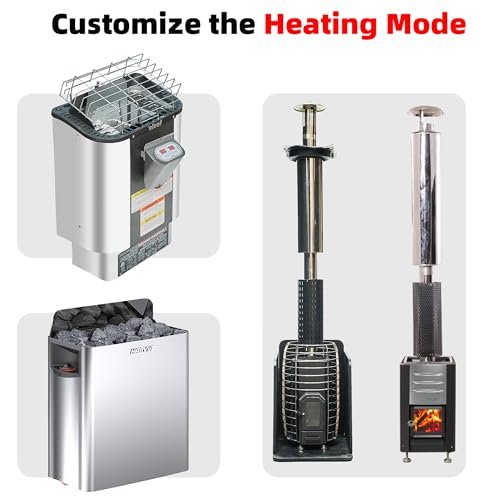
Barrel length, wood species, heater brand, heater wattage, back style, porch, and roof type are all configurable in a single order — not upsells, not separate SKUs, not factory presets dressed up as options.
Benovo's sauna kits and cold plunge tubs are sized and designed to work together, so buyers building a contrast therapy setup — heat session followed by cold immersion — can source both from the same storefront without compatibility guesswork.
Benovo's six categories cover every part of a home sauna and cold therapy setup: outdoor barrel saunas and outdoor wooden sauna rooms for traditional steam heat, indoor infrared saunas for dry heat without an outdoor installation, cold plunge tubs for contrast therapy, and accessories and an infrared blanket that work across every configuration. If you're building a complete backyard recovery setup or just adding a plug-in infrared session to a spare room, the product you need is somewhere in this lineup.
House-shaped traditional steam sauna rooms in Canadian cedar and spruce, sized from 2–3 people up to 6–8 people, with options for dual infrared-and-steam systems and WiFi-controlled HARVIA stoves up to 8KW.
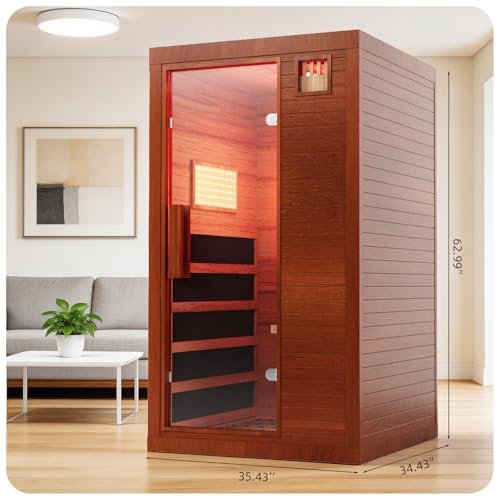
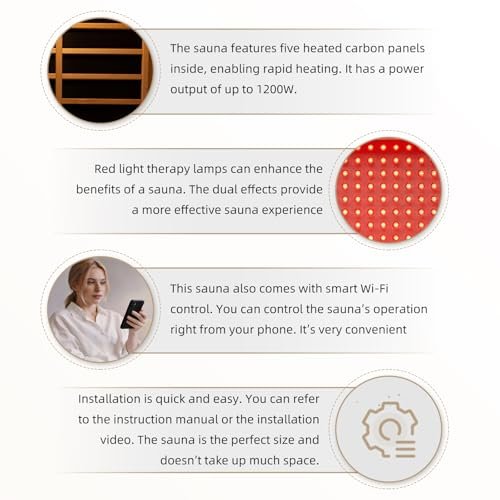
Dry heat infrared cabins from 110V/1100W single-person plug-ins through 220V/3400W full-spectrum 2-3 person models with WiFi app control and red light therapy panels. No steam, no outdoor installation needed.
Traditional steam saunas in barrel and cube formats, built from Canadian cedar or hemlock with ETL-certified TOULE or HARVIA stoves from 4.5KW to 9KW. Nineteen configurations, including wood-burning stove options.
A single 71"×35" PU leather far-infrared blanket that runs on 110V/600W, stores in a closet, and needs no installation — the entry point to Benovo's infrared line when space or budget rules out a full cabin.
A knotless spruce headrest and 32 lb of volcanic sauna stones — the two add-ons that make the most practical difference to the comfort and steam output of any existing Benovo sauna setup.
Two sizes — a 150-gallon XXL rectangular tub and a 66-gallon cedar barrel tub — both with dual chiller/heater systems that cool to 37°F and heat to 107°F via smartphone or control panel.
These twelve products turn up first because each one hits a specific decision point — the right barrel length for a patio slab, the infrared cabin that doesn't need an electrician, the cold plunge tub that actually chills below 40°F — rather than being the cheapest or the most promoted. They span all six categories, so there's a useful starting point here whether you're outfitting a backyard or a spare bedroom.
Benovo's outdoor barrel sauna line is the largest in the catalog — 19 configurations covering 2-person spruce entry kits through 8-person Canadian cedar barrels with panoramic acrylic hemisphere backs. Every electric model runs on 220V with an ETL-certified TOULE or HARVIA stove; wood-burning stove options are also available for buyers who want the traditional experience without an electrical connection. Barrel lengths range from 47.24" to 118.11", and most models let you choose wood species, back style, roof type, and porch addition in a single order.
The single most common sizing mistake in barrel sauna purchases is pairing the wrong heater wattage to the interior volume. A rough guideline used consistently across the r/Sauna community: plan for approximately 1KW of heater output per 45 cubic feet of sauna interior. Get that ratio wrong and you'll either wait 90 minutes to reach temperature or run a heater that cycles off too quickly to sustain proper steam.
Benovo's barrel line runs from 47.24" to 118.11" in length — all at a consistent 70.86" width and height for the cylindrical models. Here's how the math works out across the lineup:
Heat in any sauna rises — which means bench height determines what temperature you're actually sitting in. In a barrel sauna, the usable heat zone is typically the upper third of the interior. A r/Sauna thread that's been cited repeatedly in barrel sauna discussions put it plainly: low benches mean you're sitting in cooler air, which makes the whole sauna feel underperforming regardless of heater output. The Benovo 6-person and larger barrel configurations include higher bench placement by design — this isn't incidental.
One California buyer running a 6-foot barrel with an 8KW heater reported reaching 170°F in 15–20 minutes. That's a well-matched setup: large interior, correctly sized heater, high benches. Contrast that with the common complaint that barrel saunas feel inefficient — which almost always traces back to undersized heaters, low bench height, or both.
The cylindrical barrel shape uses natural convection efficiently: hot air rises from the stove, circulates around the curved walls, and doesn't pool in corners the way rectangular rooms can. But barrel interiors have one real limitation — headroom near the door ends is lower than at the crown. If you're 6'2" or taller, a cube format like the Custom Cube Sauna 4-8P gives you upright clearance across the full interior, at the cost of slightly less convection efficiency compared to the curved barrel design.
Wood-burning stove buyers should note that the stove body itself takes up meaningful floor space. Benovo's product listings for wood-burning configurations specify a minimum 70.86" barrel length — shorter barrels simply don't leave enough interior room for a wood stove without crowding the bench.
Most barrel sauna product pages tell you assembly is easy. Most of them are underselling what's involved. A Benovo outdoor barrel sauna is a real construction project — not a difficult one, but one that goes better when you know what to expect before the pallet arrives.
A barrel sauna needs a level, stable, moisture-resistant base. The three realistic options for most backyards:
The Benovo barrel sauna kits use a cradle system — two curved base rails that the barrel staves rest on — so the foundation doesn't need to be perfectly matched to the barrel's curve. It just needs to be flat and stable enough that the cradle doesn't twist.
Tongue-and-groove barrel stave assembly is the main construction task. Each cedar or hemlock stave interlocks with the adjacent one — no nails, no adhesive, no complex carpentry. But the staves are heavy, and holding them in position while you work around the barrel requires a second person. Plan on 4–6 hours for a 2-person assembly team on a 6-person or smaller barrel, including unpacking, cradle positioning, stave assembly, door installation, and heater mounting. Larger barrels (94.49"+ length) typically add 1–2 hours to that estimate. Benovo provides installation drawings and offers video support — use both, because the written instructions on their own leave a few steps ambiguous on first read.
Tools you'll actually need: a rubber mallet (included with some Benovo kits), a level, a tape measure, a drill for electrical connections, and standard hand tools for the stove mounting hardware. The stave assembly itself requires no power tools.
Permit requirements vary by municipality and aren't something any sauna brand can answer definitively for your address. That said, the general pattern across most US jurisdictions: a freestanding outdoor structure under 200 square feet typically doesn't require a building permit, but the electrical work — specifically the 220V dedicated circuit required for all Benovo electric barrel sauna models — almost always does require a licensed electrician and an electrical permit.
Budget 1–3 hours of licensed electrician time to run a dedicated 220V/30-amp circuit from your panel to the sauna location, plus the permit fee for the electrical work. If your panel is close to the installation site, this is a modest additional cost. If you're running 50+ feet of new circuit, it's worth getting a quote before you finalize installation placement. The wood-burning stove option eliminates this entirely — no electrical connection to the stove itself, though you'll still need an outlet for lighting and accessories if you want them.
Canadian cedar and hemlock are naturally moisture-resistant, but outdoor exposure means annual maintenance matters. Inspect the exterior staves each spring: look for surface checking (small surface cracks that are cosmetic and normal) vs. deep splitting along the grain (structural, needs attention). Apply an exterior wood preservative or cedar oil every 1–2 years depending on your climate. The asphalt shingle roofs on most Benovo barrel models are weatherproof without additional treatment. Sauna stones should be inspected annually — when they start cracking or crumbling, replace them, since degraded stones lose heat retention and produce noticeably less steam per pour.
Benovo's indoor infrared line spans 14 models — from a 110V/1100W single-person Okoumé cabin that assembles in about 20 minutes and plugs into any standard outlet, to a 220V/3400W 2-3 person full-spectrum model with 7 carbon panels, 2 red light tubes, an IR lamp, WiFi app control, and Bluetooth speakers. That range matters because the voltage requirement determines whether you need an electrician. The 110V and 120V models are plug-and-play; the 220V models need a dedicated 30-amp circuit. One model — the 2-person outdoor-rated cedar cabin with ABS exterior — ships pre-assembled and requires no assembly at all.
Benovo's indoor infrared line spans three distinct voltage tiers, and the tier you choose determines whether you can plug in and start your first session this weekend or need to schedule an electrician visit first. This is the question that drives more returns in the home sauna category than any other — buy the wrong voltage tier for your electrical situation and the sauna sits in boxes until you sort it out.
Four Benovo infrared models run on 110V or 120V and plug into any standard household outlet:
These models are genuinely plug-and-play. If you have a standard outlet in the room you're placing the sauna, you're done with electrical planning.
Two Benovo infrared models run on 220V and require a dedicated 30-amp circuit:
If your home doesn't already have a 220V circuit near your planned installation location, a licensed electrician needs to run one. Typical scope: 1–3 hours of labor depending on distance from your electrical panel, plus a permit in most jurisdictions. Get this scheduled before the sauna arrives so you're not storing boxes while you wait.
The 3400W 220V models heat noticeably faster than 1100W–2000W 120V models. The 110V/1100W Infrared Sauna 1P 110V will get to session temperature — but it takes longer and tops out at a lower ceiling than the 220V flagships. For a single-person daily-use session where you're not in a hurry, the 110V models are adequate. For 2-person sessions or if you want to step in within 15–20 minutes of turning it on, the 220V/3400W models are the models that deliver that experience.
Infrared and traditional steam saunas are often compared as if one is simply a worse version of the other. They're not — they're genuinely different experiences that suit different buyers. The right answer depends on what you're trying to get out of a session, not on which format has better marketing.
Traditional steam saunas (barrel saunas, outdoor wooden rooms, and the Benovo Indoor Steam Sauna 2P Hemlock) operate at 160–195°F with steam produced by pouring water over heated volcanic stones — what the Finnish tradition calls löyly. The air is hot and humid. The heat hits immediately when you walk in.
Infrared saunas run cooler in ambient air temperature — Benovo's infrared models top out around 149–170°F depending on wattage — but they heat your body directly via infrared radiation rather than by heating the surrounding air first. The result: you sweat heavily at a lower ambient temperature. The session feels less intense to some people and more tolerable to others, particularly those who find traditional steam heat difficult to breathe in.
Research published in journals covering cardiovascular health has documented that both formats produce similar increases in heart rate, core body temperature, and sweat volume during comparable session lengths. But the physiological pathway differs, and the subjective experience differs enough that buyers who've tried both often have a clear preference. Neither preference is wrong.
If you want löyly — the experience of throwing water on hot stones and breathing the surge of steam — that requires a traditional steam setup. Infrared saunas don't produce steam. Benovo's indoor infrared line (outside of the Indoor Steam Sauna 2P Hemlock) is entirely dry heat. If the steam ritual is the part of sauna you actually value most, an infrared cabin isn't going to replicate it.
Traditional barrel saunas with a properly sized heater reach session temperature in 30–45 minutes. A well-matched setup — like a California user reported with his 6-foot barrel and 8KW heater — gets to 170°F in 15–20 minutes. But that's with the right heater-to-volume ratio.
Infrared saunas heat faster because they're heating a smaller insulated space and directing radiation at the occupant rather than conditioning the air volume first. Benovo's 220V/3400W full-spectrum models are designed to be usable within 15–20 minutes from a cold start. The 110V/1100W models take longer — more like 30–40 minutes to reach peak operating temperature.
One honest limitation of Benovo's infrared line worth noting: the indoor cabins are built for dry heat sessions and don't replicate the communal, high-temperature experience of a large traditional steam sauna. If you're comparing a 2-person Benovo infrared cabin to a 6-person outdoor cedar barrel session with four friends and three rounds of löyly — those are different activities. Match the format to what you're actually going to do with it.
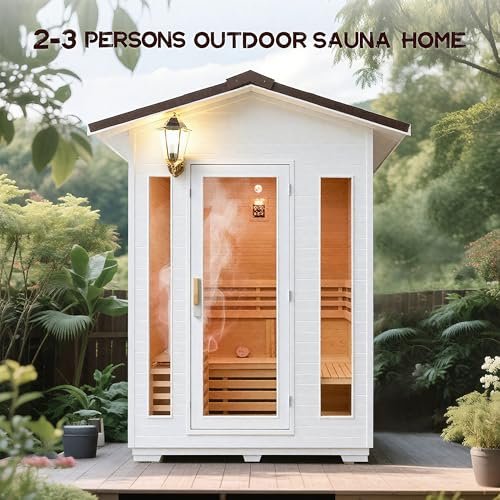
Benovo's outdoor wooden sauna room line offers house-shaped traditional steam structures in Canadian cedar and spruce, ranging from a 2–3 person 59.05"×47.24" model up to a 6–8 person 78.74"×78.74" room with a dual infrared-and-steam system. All models run on 220V and use HARVIA stoves (6KW or 8KW depending on size). The flagship 6–8 person WiFi model pairs an 8KW HARVIA steam stove with 15 far-infrared red light tubes producing 5KW in dry mode — meaning you can switch between wet steam and dry infrared in the same session without changing hardware.
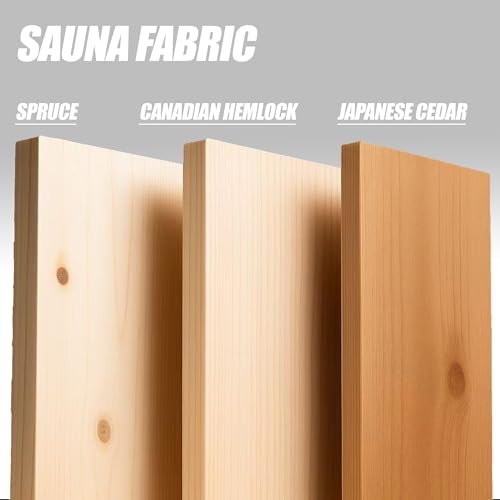
The wood species in an outdoor sauna matters more than almost any other spec — it determines moisture resistance, how the interior smells and feels during a session, maintenance requirements, and how well the structure holds up over 10–20 years of outdoor exposure and weekly heat cycles. Benovo's outdoor wooden sauna room line uses Canadian cedar, Canadian hemlock, and spruce depending on the model. Here's what each choice means in practice.
Canadian red cedar is the benchmark wood for outdoor sauna construction, and for good reason. Cedar contains natural oils — primarily thujaplicins and thujic acid — that give it inherent resistance to moisture, decay, and insect damage without any chemical treatment. This matters enormously for a structure that's going to experience daily temperature swings from 160°F+ interior heat to whatever your outdoor ambient temperature is, week after week, year after year.
The aromatic quality is real and not incidental: the cedar scent is produced by those same natural oils and is part of what makes a cedar sauna session distinct from an unscented one. It's not added fragrance; it's the wood off-gassing naturally in the heat.
Traditional saunas with good-quality cedar construction and proper maintenance are documented to last 20–30 years, with well-maintained premium builds reportedly reaching 40–50 years according to industry standards. Benovo's Canadian cedar outdoor rooms — the Cedar Sauna Room 2-3P, Cedar Sauna Room 6-8P, and the Dual System models — are factory-sorted for grain stability before assembly, which reduces the risk of warping and splitting at the joint lines over time.
Maintenance reality: cedar's natural oils don't make it maintenance-free. Annual inspection plus cedar oil or a penetrating wood preservative on exposed exterior surfaces extends life significantly. Interior surfaces are generally left untreated — applying anything to interior wood that will off-gas in heat is a bad idea.
Hemlock is the second-most common sauna wood in North American production, and it's a legitimate choice — not a compromise. Canadian hemlock is harder and denser than cedar, which means it holds its dimensional shape well under heat cycling. It doesn't have cedar's natural oil content, so it has less inherent moisture resistance, but it's still classified as a stable outdoor-capable wood when properly maintained.
The practical tradeoff: hemlock is less aromatic than cedar. The session smells like hot wood, not cedar. For buyers who prefer a neutral scent environment or want to add their own essential oils without competing with the cedar aroma, hemlock is actually the better choice. For buyers who want that classic cedar sauna smell as part of the experience, cedar is the only answer.
Hemlock is used in several Benovo outdoor customizable configurations (the Custom Cube Sauna 4-8P is available in cedar or hemlock) and in the Custom Barrel with Porch line. Budget a little more time for exterior sealing on hemlock compared to cedar — the natural oil difference means hemlock is slightly more dependent on applied protection to maintain moisture resistance over years of outdoor exposure.
Spruce is softer and less moisture-resistant than either cedar or hemlock. In the Benovo lineup, it appears on the Spruce Barrel Sauna 2-3P (the entry-level 47.24" barrel) and the Dual System Sauna Room 6-8P WiFi flagship — an unusual pairing, since spruce is generally the budget material while that WiFi model is the top-of-line outdoor room.
The reason spruce shows up on the WiFi flagship likely relates to the fact that that model has a painted white exterior — the ABS-equivalent paint layer provides the moisture protection that cedar provides through its natural oils, so the underlying wood species becomes less critical to weathering performance. On a model where the exterior wood is fully exposed and uncoated, cedar or hemlock is the more durable choice for most US climates.
Spruce is a reasonable choice for the entry-level barrel in a sheltered location (under a pergola, in a garage-adjacent space with roof overhang) where full-weather exposure is limited. In full outdoor exposure with no overhead protection, cedar or hemlock will hold up better over time and require less maintenance intervention in the first five years.
Benovo offers two cold plunge tubs — a 150-gallon XXL rectangular tub (80"×33.5"×38.5") and a 66-gallon compact barrel (31.49"×39.37") — both built with stainless steel inner liners, Canadian red cedar exteriors, and 110V dual-system chillers that cool water down to 37°F and heat it up to 107°F. The dual chiller/heater function is genuinely uncommon at this price tier: most cold plunge tubs are chiller-only, meaning you get a cold bath or nothing. With either Benovo model, you can run a cold plunge session in the morning and a warm soak in the evening from the same unit, controlled via the panel or your phone.
Benovo's accessories line is small by design — just two products, both chosen because they address real session-quality gaps rather than padding out a catalog. The knotless spruce headrest improves comfort during long sessions in any Benovo cabin or barrel, and the 32-pound volcanic stone set replenishes the stones on any electric or wood-burning stove when existing stones begin to crack or lose heat retention. Both ship separately from the main sauna kits and can be added at any point.
The Benovo Far Infrared Sauna Blanket is a single product doing one specific job: delivering far-infrared heat to your full body from a 71"×35" PU leather wrap that plugs into any standard 110–120V outlet at 600W. Temperature runs from 60°F to 175°F, adjusted via remote control, with sessions timed from 0 to 99 minutes. It folds flat for storage and doesn't require floor space, a dedicated circuit, or any assembly. For buyers who want infrared heat sessions but don't have room for a cabin — or don't want to spend the time or money on one — this is the straightforward starting point.
Benovo's six product lines cover enough ground that the first real decision isn't which product to buy — it's which category makes sense for your space, climate, electrical situation, and how you actually plan to use it. Getting this right upfront saves you from ordering a 220V sauna to a room with no 220V circuit, or a 70-gallon cold plunge barrel for two people who want to plunge together.
Choose an outdoor barrel sauna if you have a backyard or deck with space for a minimum 70.86"×70.86" footprint, access to a 220V outlet (or budget for an electrician to run one), and you want a traditional steam session with löyly. The barrel format is most efficient when properly sized — a 6-person barrel with a 6KW heater will reach 170°F faster than many gym saunas. If you want to configure every detail yourself — wood species, heater brand, back style, porch, roof — Benovo's customizable barrel and cube lines are genuinely menu-driven, not marketing language. If you want a fixed-spec model without decisions to make, the Cedar Barrel 6×6 models are straightforward.
Choose an outdoor wooden sauna room if you want a traditional steam sauna with a house-shaped structure and a larger footprint — the 6-8 person models occupy a 78.74"×78.74" floor area, which suits groups or families who want to sauna together regularly. These models use HARVIA stoves (the same brand used by commercial sauna installations) and Canadian cedar on most configurations. The dual-system models add far-infrared capability alongside steam, so you can run dry sessions in the same structure without additional equipment. All outdoor wooden room models require 220V.
Choose an indoor infrared sauna if you don't have outdoor space, don't have (or don't want to install) a 220V circuit, or want a setup that works in a spare room, basement, or garage without permanent modifications. The 110V models — starting with the Infrared Sauna 1P 110V at 110V/1100W — plug into any standard outlet and can be assembled in under 30 minutes. The 220V/3400W full-spectrum models require an electrician but deliver faster heat-up and higher output that's comparable to some commercial infrared installations. One model, the Infrared Sauna 2P Outdoor-Rated, ships fully assembled and can be placed outdoors — the only infrared model in the lineup with that capability.
Choose a cold plunge tub as a companion to any sauna setup if you want contrast therapy — alternating heat sessions with cold immersion. Both Benovo cold plunge models work on standard 110V and need no dedicated circuit, which makes them easier to integrate than the sauna side of the equation. The 150-gallon XXL fits 1-2 people lying semi-reclined and suits contrast therapy paired with a 4-6 person barrel or room; the 66-gallon barrel fits one person upright and pairs well with a solo infrared session. Both cool to 37°F and heat to 107°F from the same unit.
Choose the infrared sauna blanket if you want infrared heat sessions with zero installation, zero floor space, and standard outlet power. It won't replicate a barrel steam session or a full infrared cabin — the experience is different, with lower ambient heat and a more enclosed, lying-down format. But for daily recovery sessions, post-workout use, or buyers in apartments or rented spaces where permanent installation isn't possible, it covers the core infrared heat function without any of the setup complexity.
Choose sauna accessories at any point to address specific session gaps: the Spruce Headrest Pillow for any cabin or barrel where you want to lie down comfortably, and the Volcanic Sauna Rocks 32 lb for stove replenishment when existing stones start to crack or lose steam output. These work across all Benovo electric and wood-burning stoves without compatibility concerns.
Most buyers who land on Benovo know roughly what they want but aren't sure which specific model fits their situation. Here are five profiles drawn from the real questions that come up in sauna and cold plunge communities — each with a recommended path through the catalog.
You own your home, have an existing patio slab or outdoor deck, and have been thinking about a sauna for two or three years. You've looked at custom builds but decided the cost and timeline don't make sense. You want something real — not a tent, not a blanket — that will last a decade and actually feel like a sauna.
The right path: start with the Cedar Barrel 6×6 with Porch (fixed specs, straightforward build, ETL-certified TOULE 6KW) if you want a clear decision without choices to make. Or the Custom Barrel Japanese Cedar if you want to select the back style, roof type, and heater brand yourself. Either way, budget for a licensed electrician to run your 220V circuit before the sauna arrives. Most patio slab installations are done in a weekend with a helper.
You run, lift, or train regularly. You've read about heat and cold contrast therapy — not in a biohacking context, but because your legs are sore and you want something that actually helps. You want both a sauna and a cold plunge at home and want them to work together without sourcing from two different brands.
The right path: a mid-size barrel sauna (the Custom Barrel with Porch in 70.86" length with a 6KW heater handles 4–6 people and fits most backyard spaces) paired with the Cold Plunge Tub 150 Gal. The 150-gallon tub runs on 110V/1.5HP, plugs into a standard outlet, and chills to 37°F — cold enough for a meaningful contrast therapy session after a 30-minute heat session. Both ship from the same Benovo storefront.
You live in an apartment, rent your home, or simply don't have outdoor space that works for a permanent structure. You've seen infrared saunas recommended and want to know if they're worth it without committing to a major installation project.
The right path: the Infrared Sauna 1P 110V (110V/1100W, Okoumé, assembles in 20 minutes, plugs into any standard outlet) is the genuine no-commitment starting point. It fits in a closet when disassembled and doesn't require a contractor, an electrician, or a landlord's approval. If you want more output and are willing to have an electrician run a 220V circuit, the Full Spectrum Sauna 2-3P WiFi is a significant step up in performance with WiFi pre-heating so it's ready when you walk in the door.
You've done your research on r/Sauna. You know the difference between TOULE and HARVIA. You want cedar, not hemlock, a HARVIA 8KW stove, a porch, and either a panoramic acrylic back or a full-glass back — and you're frustrated that most brands sell one configuration with a color option and call it customized.
The right path: the Custom Barrel with Porch or the Custom Square Barrel 3 Colors, both of which offer a genuine menu across wood species, heater brand (TOULE or HARVIA), wattage (4.5KW through 9KW), back style (all-wood, half-glass, full-glass, panoramic acrylic), roof type, and porch inclusion. Configure at order time. Production lead time is longer on custom orders — Benovo's listings note 3–5 week lead times on configured models — but you get exactly what you want rather than settling for a fixed configuration.
You want the full hot-cold protocol: 15–20 minutes of sauna heat followed immediately by a cold plunge, repeated 2–3 rounds. You've read enough to know this requires both a sauna that heats efficiently and a plunge that gets cold enough to matter — not a stock tank with ice bags.
The right path: any Benovo barrel or outdoor wooden sauna room paired with the Cold Plunge Tub 150 Gal. The 150-gallon model cools to 37°F via its 1.5HP dual-system chiller — well below the 50–59°F range cited as optimal for a strong physiological response. The dual heat/chill function means you can also warm it to 107°F for a warm soak, giving you three temperature environments from two products: hot sauna, cold plunge, and warm soak. If space is tight, the Cold Plunge Barrel Tub 66 Gal handles one person in upright immersion and cools to the same 37°F floor on a 1HP dual-system.
Benovo doesn't appear in the Forbes, Garage Gym Reviews, or Outside Online sauna roundups — those lists consistently feature Redwood Outdoors, Almost Heaven, Dundalk LeisureCraft, and Sun Home. That's a straightforward fact worth acknowledging, and it means buyers who start their research on those publications won't encounter Benovo until they reach Amazon directly. Here's an honest look at where the differences actually lie.
Redwood Outdoors is the Garage Gym Reviews top pick for outdoor sauna, and their thermowood Finnish sauna is genuinely well-regarded. Thermowood — lumber heat-treated at approximately 400°F in a controlled, oxygen-deprived environment — has documented dimensional stability and moisture resistance that approaches or matches Canadian cedar's natural properties through a different mechanism. Both are legitimate material choices for outdoor sauna construction.
The real difference is in configuration flexibility. Redwood Outdoors sells a defined product line with limited customization. Benovo's barrel and cube lines let you select wood species, barrel length, heater brand and wattage, back style, porch, and roof type in a single order. If the Redwood configuration is exactly what you want, Redwood is a good product with strong third-party reviews. If you want something specific — a HARVIA 9KW stove, a panoramic acrylic hemisphere back, Canadian cedar at a particular length — Benovo's custom line is the path to get there without a full custom build.
Redwood Outdoors sells primarily through its own website. Benovo sells through Amazon, which means Amazon's standard return policy, Amazon customer service, and Prime shipping apply — a meaningful practical difference for buyers who value those protections.
Almost Heaven occupies a similar market position to Benovo — traditional steam barrel and cabin saunas with Harvia heater options, sold at accessible price points. Almost Heaven has stronger third-party editorial coverage and a longer Amazon track record with more reviews on individual products.
Where Benovo pulls ahead is in the scope of the ecosystem. Almost Heaven focuses on saunas. Benovo's catalog includes cold plunge tubs with dual chiller/heater systems, indoor infrared cabins spanning 110V to 220V/3400W, and outdoor dual-system rooms that switch between steam and far-infrared — all from the same storefront. For buyers building a contrast therapy setup or wanting indoor infrared alongside an outdoor barrel, sourcing both from Benovo means consistent product design language and a single point of contact for support.
Almost Heaven's established review history gives buyers more social proof to evaluate before purchasing. Benovo's newer Amazon presence means fewer reviews on some models, which is a real trade-off for buyers who weight community validation heavily. That's a fair concern. The counterpoint: Benovo's factory-direct model and ETL-certified TOULE and HARVIA heaters — the same heater brands that appear in both Benovo and Almost Heaven products — provide meaningful independent verification of the heating hardware quality even without years of review accumulation.
Benovo is the right call for buyers who want a specific configuration, who are building a combined sauna-and-cold-plunge setup, or who are comparing infrared options alongside outdoor barrel options and want to keep everything under one brand. It's less immediately compelling for buyers whose primary input is "show me the most-reviewed barrel sauna on the market" — that buyer is going to find Redwood Outdoors or Almost Heaven with more review depth per model.
ETL certification is the specific safety signal the r/Sauna community consistently checks before buying a sauna heater — and it's the one signal that actually means something verifiable. Here's what it is, what it doesn't mean, and which Benovo heater models carry it.
ETL (Electrical Testing Laboratories) is an OSHA-recognized Nationally Recognized Testing Laboratory (NRTL). A product with ETL certification has been independently tested to verify it meets the applicable North American electrical safety standards — in practice, the same standards that UL (Underwriters Laboratories) certifies to. The two marks are functionally equivalent for product safety purposes; ETL is simply a different accredited testing body that does the same work.
For a sauna heater specifically, ETL certification means the unit has been tested for electrical safety at its rated voltage and wattage — wiring integrity, thermal cut-offs, grounding, insulation resistance. It's the difference between a heater that's been independently verified to operate safely and one where you're taking the manufacturer's word for it.
This matters practically for home insurance. Most homeowner's insurance policies require that electrical appliances be certified by an NRTL (ETL, UL, or equivalent) for coverage to apply in the event of an electrical fire or damage. An uncertified heater in a covered structure can void a claim. The r/Sauna community flags uncertified heaters in sourcing discussions for exactly this reason.
Benovo pairs its outdoor barrel saunas and outdoor wooden rooms with two heater brands, both ETL-certified:
The Indoor Steam Sauna 2P Hemlock pairs with a 220V/6KW TOULE ETL-certified heater, per product listing B0FQ5873HM. The outdoor wooden sauna room models (Cedar Sauna Room 6-8P, Dual System Sauna Room 2-3P) use HARVIA 6KW and 8KW stoves with ETL certification confirmed in their listings.
Wood-burning stoves don't carry ETL certification — ETL is an electrical safety standard, and wood-burning stoves don't connect to electrical circuits. This is normal and expected; the relevant safety consideration for wood-burning stoves is clearance to combustibles and proper installation, not electrical testing. Benovo's product listings provide guidance on minimum interior length requirements for wood-burning stove installation (70.86"+ is recommended to accommodate the stove body).
ETL certification covers electrical safety — not heating performance, not sauna stone quality, not overall build quality. A heater can be ETL-certified and still be undersized for its sauna's interior volume, or have a control panel that feels flimsy. Treat ETL as a necessary baseline, not a complete product evaluation. The heater wattage-to-interior-volume match (covered in the sizing guide earlier on this page) matters just as much to your actual sauna experience as the certification status.
We put this video together to walk you through exactly what the customization process looks like — because a spec sheet only tells part of the story. You'll see how the porch addition changes the footprint and feel of the barrel, and how the choice between wood-fired and electric heating shapes the whole setup. If you're deciding between configurations, watch this before you finalize anything.
"I put the Custom Barrel with Porch on a patio slab we already had — about 80 square feet of existing concrete. The tongue-and-groove assembly took my brother-in-law and me about five and a half hours, which was right on what I expected after reading forums. The 6KW TOULE gets it to 165°F in roughly 35 minutes. Only complaint: the written instructions skip a few steps that the video makes obvious. Watch the video first."— David R., Backyard Upgrader (homeowner with existing patio), on outdoor barrel sauna
"I went with the Hemlock Infrared Sauna 1P — 110V, plugged into the outlet in my home gym, assembled in about 20 minutes. I was skeptical the foot heater would make a real difference but it does. The bench gets uncomfortable after about 25 minutes without the headrest though, so order that at the same time. Heat is consistent and I use it 4-5 times a week."— Michelle T., Indoor Infrared Newcomer (home gym user, no outdoor space), on indoor infrared sauna
"Bought the Full Spectrum Sauna 2-3P WiFi for my basement. Had an electrician run the 220V circuit — took about two hours total, cost was reasonable. The WiFi pre-heat is the feature I use most: I start it from my phone on the drive home from the gym and it's ready when I walk in. 3400W is a noticeable difference from the 1700W model I tried at a friend's house."— James K., Recovery-Focused Athlete (triathlete, daily use), on indoor infrared sauna
"We ordered the Cedar Sauna Room 6-8P for our backyard — there are four of us who use it regularly, sometimes six. The 8KW HARVIA heats the 78"×78" interior solidly. Cedar smell on the first few sessions was strong, which I loved. Assembly took a full day with three people. Foundation prep was the part nobody mentioned anywhere: get your concrete slab level before the kit arrives or you'll spend two hours shimming."— Karen S., Backyard Upgrader (family use, group sessions), on outdoor wooden sauna room
"I paired the Cold Plunge Tub 150 Gal with our barrel sauna. The dual chiller/heater setup is the thing nobody else offers at this tier — I run the sauna at 170°F, then plunge at 40°F, usually three rounds on Saturday mornings. Getting to 37°F takes about 4–5 hours from room temperature on first fill, so plan ahead. Water maintenance is real: drain and refill every 3 weeks or so. The stainless inner liner makes cleaning straightforward."— Marcus W., Recovery-Focused Athlete (weekly contrast therapy protocol), on cold plunge tub
"The Far Infrared Sauna Blanket is exactly what I needed as an apartment renter. Folds up, stores under my bed, plugs into a standard outlet. I use it three or four times a week after workouts. It's not the same as a full sauna — the enclosed feeling takes getting used to and you need to wear thin clothes inside it. But I genuinely sweat more than I expected at 155°F and sleep noticeably better afterward."— Stephanie L., Indoor Infrared Newcomer (apartment renter, no installation option), on infrared sauna blanket
Benovo started as a sauna-focused manufacturer with a direct factory operation — no intermediary brands, no white-labeling from a general-purpose furniture supplier. The outdoor barrel sauna line came first, built around Canadian cedar and hemlock construction with ETL-certified TOULE and HARVIA electric stoves sized to each barrel's interior volume. That foundation — real wood, certified heating hardware, factory-controlled production — is what the rest of the lineup was built on top of rather than added alongside it.
The expansion into adjacent categories followed a consistent logic: each new line serves the same buyer at a different point in their setup. Outdoor wooden sauna rooms came out of demand for a house-shaped structure with larger footprints — the 6–8 person cedar and spruce room models use the same HARVIA stove hardware as the barrel line, just scaled to a 78.74"×78.74" interior. Indoor infrared saunas addressed buyers who couldn't install an outdoor structure: the 110V plug-in models require no electrician, no foundation, and no outdoor space at all, while the 220V/3400W full-spectrum models serve buyers who want the power output of a traditional sauna installation in an indoor cabinet. Cold plunge tubs entered the lineup because contrast therapy — heat session followed by cold immersion — is the most common protocol among buyers who already own a Benovo barrel or room, and the 150-gallon and 66-gallon dual-system tubs were designed to pair with a sauna session rather than serve as standalone products. The sauna accessories (the knotless spruce headrest and the 32-pound volcanic stone set) and the infrared sauna blanket round out the catalog at opposite ends of the commitment spectrum: the accessories improve sessions you're already having, and the blanket gives buyers who aren't ready for a full cabin a genuine entry point into infrared heat without any installation requirements.
Benovo's full lineup today spans 25 products across six categories — outdoor barrel sauna, outdoor wooden sauna room, indoor infrared sauna, cold plunge tub, sauna accessories, and infrared sauna blanket — all available through the same Amazon storefront. The brand doesn't appear in the major editorial roundups yet, and that's worth saying plainly: buyers who start on Forbes or Garage Gym Reviews won't encounter Benovo until they hit Amazon directly. What they'll find there is a factory-direct operation that controls its own production, pairs certified heating hardware to the right interior volume, and offers more configuration flexibility across its outdoor lines than most competitors who sell a fixed product with a color option.
Real buyers ask these questions before ordering—here's what the research and product specs actually show.
Benovo's complete catalog — outdoor barrel saunas, outdoor wooden sauna rooms, indoor infrared saunas, cold plunge tubs, sauna accessories, and the infrared sauna blanket — is available through the Benovo Store on Amazon. All 25 products are listed under a single storefront, which means you can compare configurations across lines and place a combined order for a sauna-and-cold-plunge pairing without managing multiple vendors or shipment timelines.
Customer support for all Benovo products runs through Amazon's messaging system. For product questions — heater wattage selection, configuration options on the customizable barrel and cube lines, or installation video access — contact Benovo directly through the product listing's seller messaging link. Assembly video support is referenced in product listings for most outdoor barrel and wooden room models and is available on request.
Benovo products ship and return under Amazon's standard policies. Lead times vary by model: the entry-level Spruce Barrel Sauna 2-3P ships within 5–6 days, while custom-configured barrel and cube saunas note 2–5 week production lead times depending on configuration. Returns are handled through Amazon's standard process. Warranty terms for individual products are listed on each product detail page — check the specific listing for the model you're considering.